The proven wired standard for metering.
M-Bus is the wired Meter-Bus standard for reading utility meters over a simple two-wire cable. Where buildings are already wired, Metbox PRO collects every meter on the bus and sends the data to the platform over 4G.
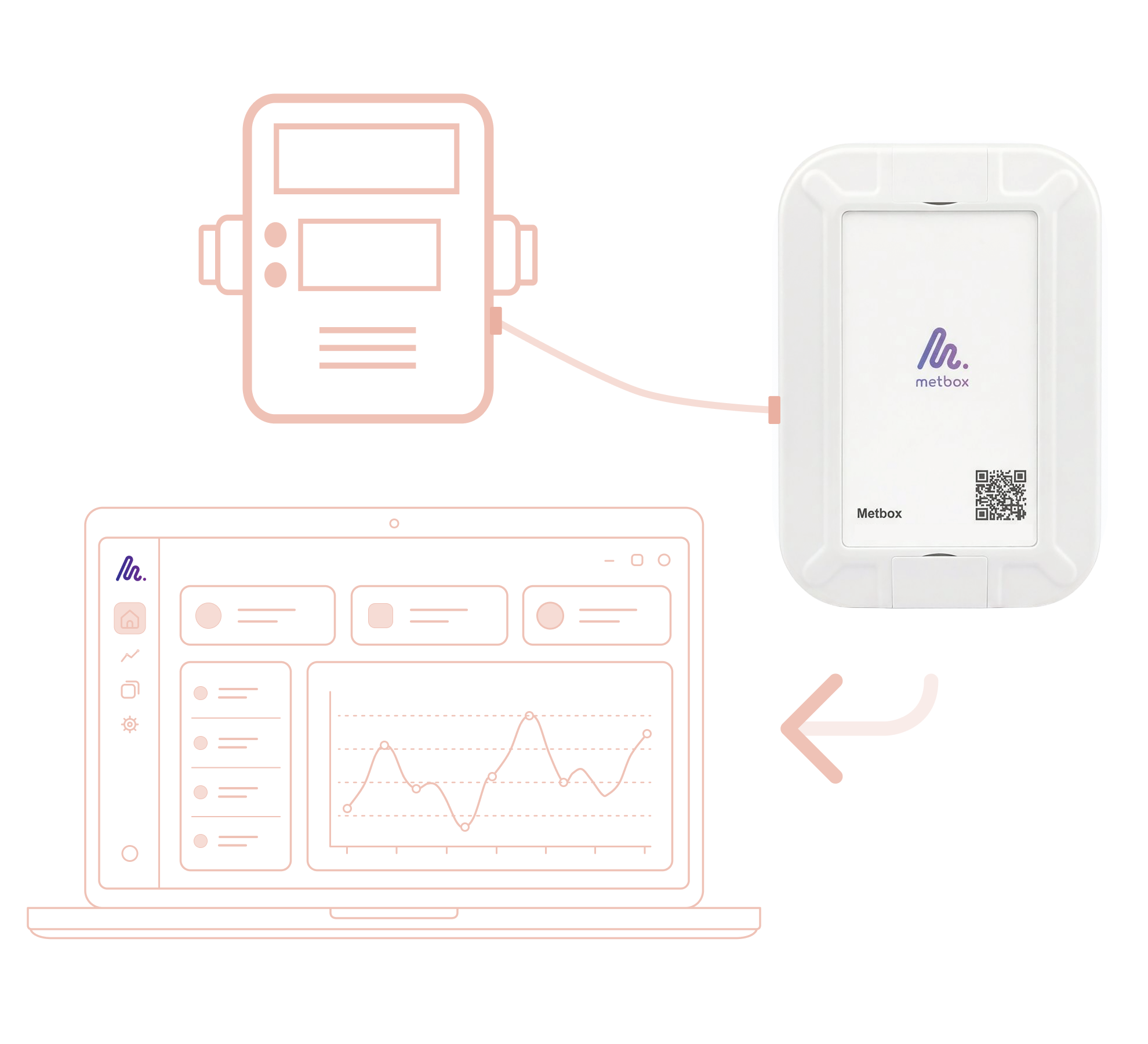
Works with 100+ M-Bus devices from 15 manufacturers
Reading meters over a single two-wire bus
M-Bus (Meter-Bus) is the wired standard defined in EN 13757-2/-3 for reading utility meters. Meters are daisy-chained onto one polarity-free two-wire cable, and a gateway polls each of them in turn - a robust, interference-free fit for buildings and technical rooms.
It's the original M-Bus; Wireless M-Bus is its radio extension. Where wired infrastructure already exists, M-Bus is dependable and needs no batteries - meters draw power from the bus itself.
What makes M-Bus a good fit
A wired standard that has been trusted in buildings for decades - robust, mature, and free of radio and battery concerns.
Simple two-wire bus
A single polarity-free pair connects every meter, so wiring is straightforward and existing cabling can often be reused.
Daisy-chain many meters
Hundreds of meters share one bus, each polled by the gateway in turn - no batteries, no radio planning.
Robust & interference-free
A wired link sidesteps radio dead-spots and congestion, giving dependable reads in dense technical rooms.
Bus-powered meters
Meters draw power from the bus, so there are no batteries to replace over the life of the installation.
M-Bus, Modbus & more
Metbox PRO reads wired M-Bus alongside Modbus and other connected devices on the same gateway.
Sent on over 4G
The gateway collects the bus and forwards readings to the Metbox platform over the 4G mobile network.
The protocol, in short
The key facts that matter when you're planning a deployment.
- Standard
- EN 13757-2 / -3 (wired)
- Medium
- Two-wire bus · polarity-free
- Topology
- Daisy-chain · multi-drop
- Baud rate
- 300–9600 baud
- Power
- Bus-powered meters · no batteries
- Best for
- Buildings & technical rooms, existing cabling
How meters are addressed on the bus
M-Bus gives each meter an address so the gateway can poll them one by one - Metbox PRO handles this for you.
Primary addressing
Each meter gets a short address (1–250) on the bus - simple and fast for smaller installations.
Secondary addressing
Meters are reached by their unique 8-digit ID, so large buses scale without address clashes.
Multi-drop bus
Many meters share one cable; the gateway polls each in turn and collects every reading.
From bus to platform in four steps
Wire the meters, connect the gateway, and readings flow up over 4G - no rounds, no radio planning.
Meters on the bus
Wired M-Bus water, heat, gas and electricity meters are daisy-chained on a single two-wire bus.
Metbox PRO polls
The gateway polls each meter on the bus by address and reads its consumption data.
Platform ingests
Readings travel over 4G to the Metbox platform, arriving validated and structured.
Export & integrate
Export consumption as CSV/XLSX or connect by API to billing and ERP platforms.
Devices that read wired M-Bus
One gateway for the bus - reading M-Bus and Modbus alike - feeding the same Metbox platform.
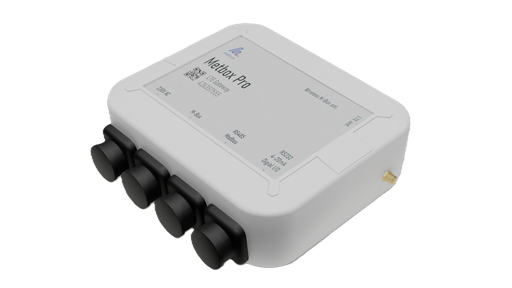
Metbox PRO
Wired gateway that reads M-Bus and Modbus meters on the bus and sends their data to the platform over 4G.
Wired M-Bus meters
Bus-powered water, heat, gas and electricity meters daisy-chained on the M-Bus - plus Modbus devices.
Metbox Platform
Dashboards, reports, alerts and API integrations for every reading your gateway collects.
Metbox PRO reads 100+ M-Bus meter models, plus Modbus. See the full compatibility list →
Bring your wired meters online
Tell the Metbox team which meters are on your bus. We'll confirm M-Bus compatibility and set up Metbox PRO for your site.
The proven wired standard for metering.
M-Bus is the wired Meter-Bus standard for reading utility meters over a simple two-wire cable. Where buildings are already wired, Metbox PRO collects every meter on the bus and sends the data to the platform over 4G.
Works with 100+ M-Bus devices from 15 manufacturers
Reading meters over a single two-wire bus
M-Bus (Meter-Bus) is the wired standard defined in EN 13757-2/-3 for reading utility meters. Meters are daisy-chained onto one polarity-free two-wire cable, and a gateway polls each of them in turn - a robust, interference-free fit for buildings and technical rooms.
It's the original M-Bus; Wireless M-Bus is its radio extension. Where wired infrastructure already exists, M-Bus is dependable and needs no batteries - meters draw power from the bus itself.
What makes M-Bus a good fit
A wired standard that has been trusted in buildings for decades - robust, mature, and free of radio and battery concerns.
Simple two-wire bus
A single polarity-free pair connects every meter, so wiring is straightforward and existing cabling can often be reused.
Daisy-chain many meters
Hundreds of meters share one bus, each polled by the gateway in turn - no batteries, no radio planning.
Robust & interference-free
A wired link sidesteps radio dead-spots and congestion, giving dependable reads in dense technical rooms.
Bus-powered meters
Meters draw power from the bus, so there are no batteries to replace over the life of the installation.
M-Bus, Modbus & more
Metbox PRO reads wired M-Bus alongside Modbus and other connected devices on the same gateway.
Sent on over 4G
The gateway collects the bus and forwards readings to the Metbox platform over the 4G mobile network.
The protocol, in short
The key facts that matter when you're planning a deployment.
- Standard
- EN 13757-2 / -3 (wired)
- Medium
- Two-wire bus · polarity-free
- Topology
- Daisy-chain · multi-drop
- Baud rate
- 300–9600 baud
- Power
- Bus-powered meters · no batteries
- Best for
- Buildings & technical rooms, existing cabling
How meters are addressed on the bus
M-Bus gives each meter an address so the gateway can poll them one by one - Metbox PRO handles this for you.
Primary addressing
Each meter gets a short address (1–250) on the bus - simple and fast for smaller installations.
Secondary addressing
Meters are reached by their unique 8-digit ID, so large buses scale without address clashes.
Multi-drop bus
Many meters share one cable; the gateway polls each in turn and collects every reading.
From bus to platform in four steps
Wire the meters, connect the gateway, and readings flow up over 4G - no rounds, no radio planning.
Meters on the bus
Wired M-Bus water, heat, gas and electricity meters are daisy-chained on a single two-wire bus.
Metbox PRO polls
The gateway polls each meter on the bus by address and reads its consumption data.
Platform ingests
Readings travel over 4G to the Metbox platform, arriving validated and structured.
Export & integrate
Export consumption as CSV/XLSX or connect by API to billing and ERP platforms.
Devices that read wired M-Bus
One gateway for the bus - reading M-Bus and Modbus alike - feeding the same Metbox platform.
Metbox PRO
Wired gateway that reads M-Bus and Modbus meters on the bus and sends their data to the platform over 4G.
Wired M-Bus meters
Bus-powered water, heat, gas and electricity meters daisy-chained on the M-Bus - plus Modbus devices.
Metbox Platform
Dashboards, reports, alerts and API integrations for every reading your gateway collects.
Metbox PRO reads 100+ M-Bus meter models, plus Modbus. See the full compatibility list →
Bring your wired meters online
Tell the Metbox team which meters are on your bus. We'll confirm M-Bus compatibility and set up Metbox PRO for your site.