The wireless standard for metering.
Wireless M-Bus is the European radio protocol built for utility metering - low-power, battery-friendly and made to send readings from meters to a gateway without wires or manual rounds. Metbox collects it out of the box.
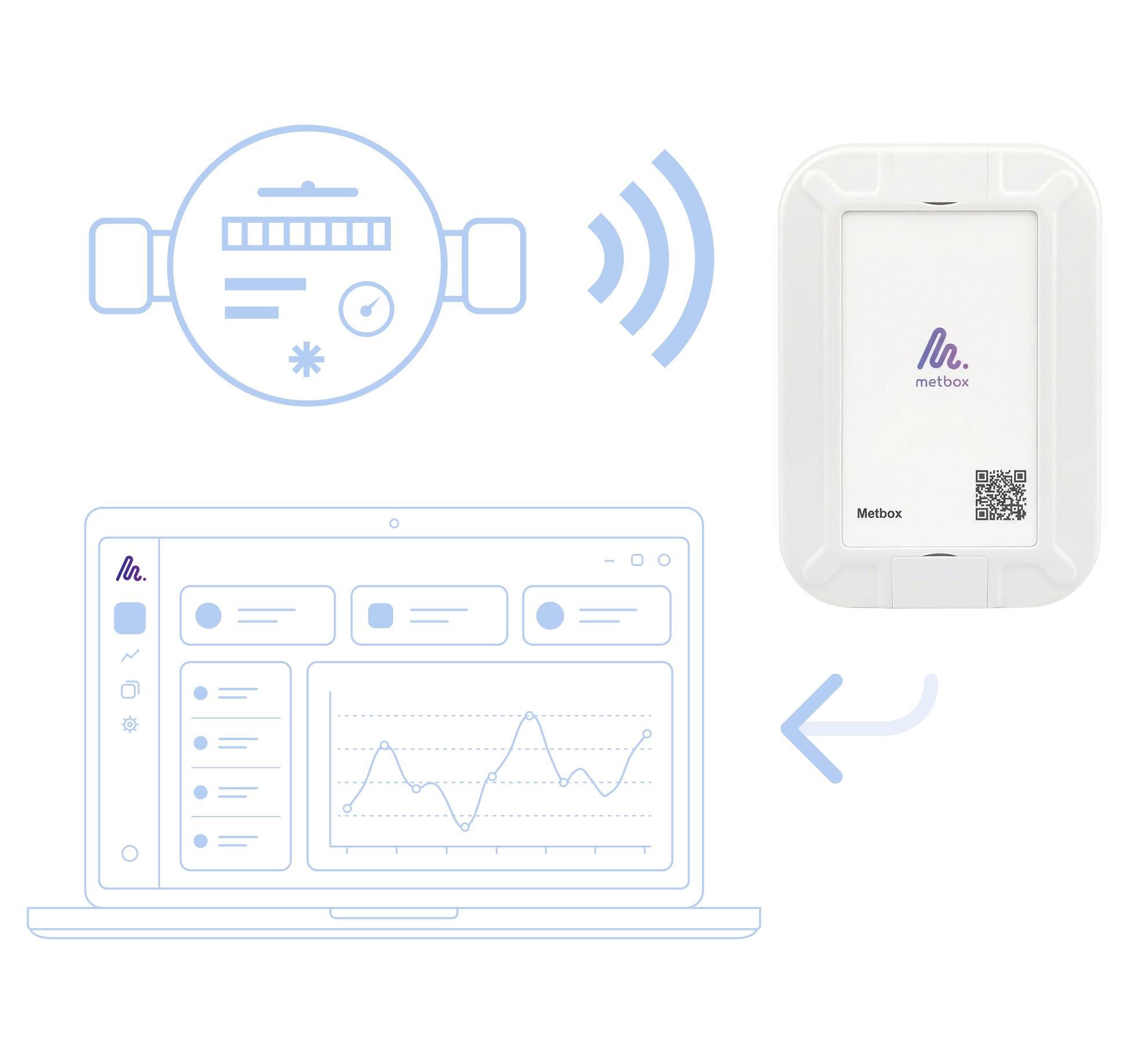
Works with 80+ Wireless M-Bus devices from 25+ manufacturers
Reading made for utility meters, over radio
Wireless M-Bus (Meter-Bus) is the wireless extension of the M-Bus standard, defined in EN 13757-4 and used across Europe for water, heat, gas and electricity meters. Each meter transmits its reading on a license-free radio band; a gateway in range receives it and forwards the data on.
The Open Metering System (OMS) profile sits on top to keep meters from different manufacturers interoperable - which is why a single Metbox gateway can read a mix of brands on one site.
What makes Wireless M-Bus a good fit
A protocol designed around the realities of metering - battery meters in the field, mixed brands, and data that has to be trustworthy.
Low power, long life
Meters transmit in short bursts and spend most of their time asleep, so a single battery commonly lasts well over a decade in the field.
License-free radio
Runs on the 868 MHz ISM band (169 MHz for long-range) - no SIM, no subscription and no spectrum licence needed to operate.
OMS interoperability
The OMS profile keeps meters from different manufacturers speaking the same language, so one gateway reads a mixed fleet.
Encrypted by design
Readings are protected with AES-128 encryption end to end, so consumption data stays private from meter to platform.
No more walk-by routes
Meters that once needed walk-by or drive-by reading become fully remote - a gateway in range collects them automatically.
One gateway, many meters
A single gateway listens to hundreds of meters at once, frequently - turning sporadic manual readings into a continuous stream.
The protocol, in short
The key facts that matter when you're planning a deployment.
- Standard
- EN 13757-4 (+ OMS profile)
- Radio band
- 868 MHz ISM · 169 MHz long-range
- Direction
- Meter → gateway (uni- & bidirectional)
- Security
- AES-128 encryption
- Power
- Battery meters · 10+ year life
- Best for
- Buildings & dense areas, mixed meter brands
The modes you'll come across
Wireless M-Bus defines several transmit modes for different use cases. Metbox gateways handle the common ones automatically.
Frequent transmit
Meters send readings often - the most common mode for fixed-network, fully remote reading.
Compact
A more efficient evolution of T, sending the same data with lower power use and airtime.
Stationary
Infrequent, scheduled transmissions - suited to meters read on longer intervals.
From meter to platform in four steps
Install a gateway, add your meters, and readings start flowing - no rewiring, no manual rounds.
Meters transmit
OMS-compatible water, heat, gas and electricity meters broadcast readings over 868 MHz radio.
Gateway receives
A Metbox wM-Bus gateway in range listens to every meter around it and decrypts the data.
Platform ingests
Readings arrive at the Metbox platform validated and structured, ready to view and analyse.
Export & integrate
Export consumption as CSV/XLSX or connect by API to billing and ERP platforms.
Devices that read Wireless M-Bus
Two gateways for the field - mains-powered or fully wireless - feeding the same Metbox platform.
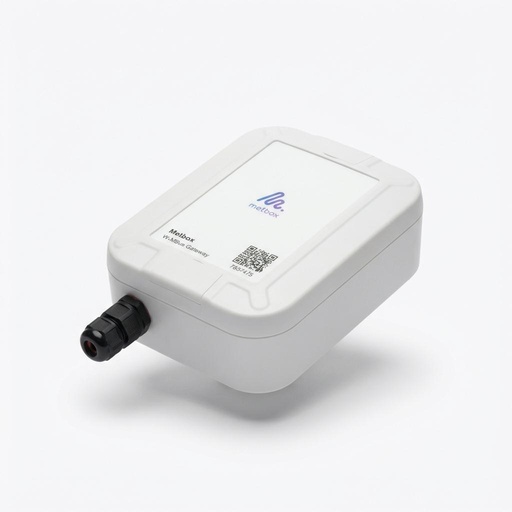
Metbox wM-Bus Gateway 230V
Mains-powered gateway for continuous, high-frequency reading of wM-Bus meters in buildings and technical rooms.
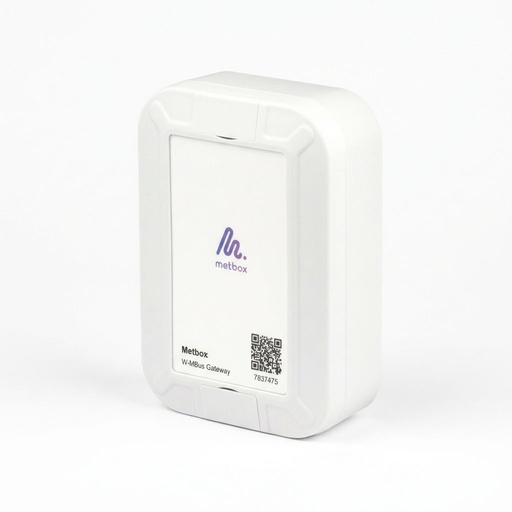
Metbox wM-Bus Gateway battery
Fully wireless, battery-powered gateway for locations without mains power - quick to place anywhere in range of your meters.
Metbox Platform
Dashboards, reports, alerts and API integrations for every reading your gateways collect.
Both gateways read 80+ OMS-compatible meter models. See the full compatibility list →
Put your wireless meters online
Tell the Metbox team which meters you have. We'll confirm Wireless M-Bus compatibility and the right gateway for your site.
The wireless standard for metering.
Wireless M-Bus is the European radio protocol built for utility metering - low-power, battery-friendly and made to send readings from meters to a gateway without wires or manual rounds. Metbox collects it out of the box.
Works with 80+ Wireless M-Bus devices from 25+ manufacturers
Reading made for utility meters, over radio
Wireless M-Bus (Meter-Bus) is the wireless extension of the M-Bus standard, defined in EN 13757-4 and used across Europe for water, heat, gas and electricity meters. Each meter transmits its reading on a license-free radio band; a gateway in range receives it and forwards the data on.
The Open Metering System (OMS) profile sits on top to keep meters from different manufacturers interoperable - which is why a single Metbox gateway can read a mix of brands on one site.
What makes Wireless M-Bus a good fit
A protocol designed around the realities of metering - battery meters in the field, mixed brands, and data that has to be trustworthy.
Low power, long life
Meters transmit in short bursts and spend most of their time asleep, so a single battery commonly lasts well over a decade in the field.
License-free radio
Runs on the 868 MHz ISM band (169 MHz for long-range) - no SIM, no subscription and no spectrum licence needed to operate.
OMS interoperability
The OMS profile keeps meters from different manufacturers speaking the same language, so one gateway reads a mixed fleet.
Encrypted by design
Readings are protected with AES-128 encryption end to end, so consumption data stays private from meter to platform.
No more walk-by routes
Meters that once needed walk-by or drive-by reading become fully remote - a gateway in range collects them automatically.
One gateway, many meters
A single gateway listens to hundreds of meters at once, frequently - turning sporadic manual readings into a continuous stream.
The protocol, in short
The key facts that matter when you're planning a deployment.
- Standard
- EN 13757-4 (+ OMS profile)
- Radio band
- 868 MHz ISM · 169 MHz long-range
- Direction
- Meter → gateway (uni- & bidirectional)
- Security
- AES-128 encryption
- Power
- Battery meters · 10+ year life
- Best for
- Buildings & dense areas, mixed meter brands
The modes you'll come across
Wireless M-Bus defines several transmit modes for different use cases. Metbox gateways handle the common ones automatically.
Frequent transmit
Meters send readings often - the most common mode for fixed-network, fully remote reading.
Compact
A more efficient evolution of T, sending the same data with lower power use and airtime.
Stationary
Infrequent, scheduled transmissions - suited to meters read on longer intervals.
From meter to platform in four steps
Install a gateway, add your meters, and readings start flowing - no rewiring, no manual rounds.
Meters transmit
OMS-compatible water, heat, gas and electricity meters broadcast readings over 868 MHz radio.
Gateway receives
A Metbox wM-Bus gateway in range listens to every meter around it and decrypts the data.
Platform ingests
Readings arrive at the Metbox platform validated and structured, ready to view and analyse.
Export & integrate
Export consumption as CSV/XLSX or connect by API to billing and ERP platforms.
Devices that read Wireless M-Bus
Two gateways for the field - mains-powered or fully wireless - feeding the same Metbox platform.
Metbox wM-Bus Gateway 230V
Mains-powered gateway for continuous, high-frequency reading of wM-Bus meters in buildings and technical rooms.
Metbox wM-Bus Gateway battery
Fully wireless, battery-powered gateway for locations without mains power - quick to place anywhere in range of your meters.
Metbox Platform
Dashboards, reports, alerts and API integrations for every reading your gateways collect.
Both gateways read 80+ OMS-compatible meter models. See the full compatibility list →
Put your wireless meters online
Tell the Metbox team which meters you have. We'll confirm Wireless M-Bus compatibility and the right gateway for your site.